
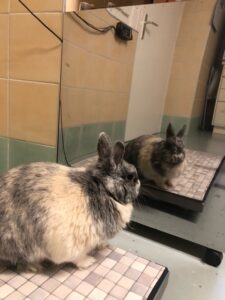
A syndrome we meet frequently in rabbits is abdominal bloat caused by gastric stasis — the stomach no longer emptying as it should.
The rabbit stops eating
It is listless and shows signs of discomfort or outright pain; its abdomen is taut and drum-like, and its droppings are small or almost absent. The stomach no longer empties properly, and the amount of gas inside it increases. The rabbit’s general condition worsens rapidly as neighbouring organs are compressed and/or substances are reabsorbed, causing toxaemia (a build-up of toxins in the blood).
The causes lie mainly in the diet (a lack of fibre such as hay, or eating fermented food), swallowed fur forming hairballs (bezoars), stress (fear, pain), poor housing conditions, or recent surgery.
The sympathetic nervous system is responsible for the loss of stomach tone and the build-up of gas. The small intestine can be affected as well.
Treatment, on the other hand, can be very frustrating and sometimes fails to improve the animal’s condition. If the syndrome is caught at an early stage, treatment can help the rabbit through the crisis. The risk of relapse remains high, however. At a late stage the outlook ranges from very guarded to poor.
Therapy relies first of all on conservative (non-surgical) measures: rehydration by drip and then by mouth, treatment with antibiotics, pain relief and drugs that restore gut movement (prokinetics), dietary measures (strictly hay, or even vegetable purées), extras such as pineapple juice (debated, but it does no harm), and more exercise.
If these measures are not enough, surgery — opening the stomach (gastrotomy) to remove a possible hairball (trichobezoar) — is the only option left to consider. It remains a weighty decision, however, as it is not without risk.
Prevention, as usual, is the best option:
- Feed your rabbit mainly hay, with other fresh foods as a complement. Few seed mixes it can pick through — prefer hay pellets instead.
- Not a life spent solely in a cage — exercise
- Avoid stressful situations
- Do not breed from fearful, naturally anxious animals.